value focused asu cable aerial fiber solutions

Lightwave communication strand has transformed modern communication flows in the digital age.
Knowing indoor optical fiber installations
Fiber optic cable has become an integral part of modern communication networks.Indoor fiber setups involve unique constraints and benefits.A successful fiber optic installation requires a thorough understanding of the various components involved, as well as best practices for routing and terminating the cable.An important factor involves selecting cable variants to match bandwidth and application demands.Likewise, skilled personnel should copyright strict safety routines to avoid cable failure
- Strategic planning and careful execution produce trouble-free in-building fiber installations
- Aspects such as facility layout, installed systems, and anticipated bandwidth requirements must be considered.
- Accurate termination techniques guarantee signal quality and consistent connectivity.
Narrowing access disparities adss cable
Exterior fiber deployments serve a vital function in reducing access gaps.Extending high-speed fiber across underserved locales helps ensure reliable connectivity for all residents.The deployment of these networks is essential to foster growth, advance education, and enable empowered digital communities
Fiber Optic Cables: Single-Mode vs Multi-Mode Overview
For long-distance data transmission, optical fiber cables outperform alternatives.They outperform metallic cables through ultra-high-speed, low-attenuation signal transfer.However, different fiber cable types possess distinct characteristics.The market primarily comprises single-mode and multi-mode fiber options.
Single-mode fiber confines transmission to a single light mode inside the core.Hence, signal dispersion is reduced, suiting it for extended distances with minimal loss.Multi-mode fiber handles multiple modes concurrently, boosting capacity for short-distance applications.These cables frequently serve local networks within buildings or campuses where distances are shorter.
- Consequently, selecting single-mode versus multi-mode copyrights on particular application needs.For extended-range, high-capacity links, single-mode fiber is the best fit.For limited-area, high-bandwidth requirements, multi-mode delivers a budget-friendly approach.

Fiber Optic Strengths
Fiber optics revolutionize data transfer due to several key advantages.A principal advantage lies in their superior bandwidth capability.Compared to copper, fiber supports vast data throughput over long distances with low signal loss.The high throughput fits applications demanding large transfers, e.g., video streaming, gaming, and cloud platforms.Additionally, fiber is robust and resists corrosion, physical harm, and electromagnetic interference.Such immunity helps ensure signal quality and reliable transfer even in severe environments.Plus, fiber systems offer stronger data protection.Transmission via fiber is inherently more secure and resistant to unauthorized interception.This security advantage positions fiber as the go-to for confidential uses like financial and government communications.
High-Capacity Fiber Solutions for Businesses
Enterprises demand durable and dependable network infrastructure to support key applications.High-performance fiber is ideal for enterprises for its bandwidth, latency, and EMI resistance.Robust fiber technologies empower enterprises with scalable, secure networks for data, voice, and video.Advanced enterprise fiber leverages single-mode, multimode, and duplex types to support escalating operational demands.Implementing fiber networks enables enterprises to optimize performance, cut costs, and strengthen market advantage.
- High-Performance Fiber Benefits:
- Extremely Large Throughput Capability
- Reduced Latency for Real-Time Use
- Not Susceptible to Electromagnetic Noise
- Scalable Infrastructure for Expansion
- Improved Protection for Transmissions
Securing Your Return: Best Practices for Fiber Installs
A detailed and strategic fiber deployment is fundamental to ensure network dependability.To get the most from your investment, apply these recommended practices:Partner with trained fiber professionals to plan a system that fulfills your needs.Utilize high-quality, shielded cables and components to mitigate signal loss and interference.Assure proper termination procedures to keep transmission performance at peak.Conduct regular inspections, maintenance, and testing of your fiber optic network to identify potential issues before they escalate.
Indoor Fiber vs Outdoor Fiber: Key Variations
Selecting the right optical cable is based on its planned application.Indoor-specific fiber cables suit internal installations with substantial bandwidth and low attenuation.These cables are usually lighter and more flexible to allow convenient installation within buildings.Exterior-rated fiber is built to cope with extreme environmental conditions.They use heavy-duty jackets that are UV-resistant alongside specialized connectors to handle rain, sun, and temperature extremes.
Here's a quick look at the key distinctions:
- Materials comparison: Indoor fiber uses less rugged materials for inside use; outdoor fiber opts for durable, weather-resistant materials
- Indoor installation tends to be less demanding in method, while outdoor installation requires detailed planning for exposure, mounting, and protection
- Connector variance: indoor types focus on compactness and manageability; outdoor types emphasize rugged sealed designs

Telecom Fiber Specifications and Regulations
The optical fiber sector depends on common standards and rules to guarantee interoperability and performance.These standards are developed by global organizations, such as the International Organization for Standardization (ISO) and the Institute of Electrical and Electronics Engineers (IEEE).Major norms cover structural cable details, transmission properties, connector definitions, and testing methods.The regulations also seek to ensure safety, dependability, and interoperability across fiber systems.
- Commercial adoption of standards is vital to facilitate effective design, make, and implementation of fiber networks.
- Following standards minimizes errors and ensures maximum data transfer performance.
Future Trends in Fiber Optic Technology
Fiber optics are set for significant transformation due to the surge in demand for higher bandwidth, lower latency, and enhanced protection.A key trend is growth in dense wavelength division multiplexing (DWDM), enabling many data channels over one fiber and greatly increasing capacity.A related trend involves adopting novel materials and modern manufacturing techniques.Researchers are testing advanced glass fibers, plastic optics, and photonic crystal concepts to improve bandwidth and resilience.
In addition, researchers and engineers work on new fiber uses beyond usual telecommunications and data transfer.Such applications encompass fiber-based sensing, monitoring, and detection for sectors like healthcare, manufacturing, and agriculture.
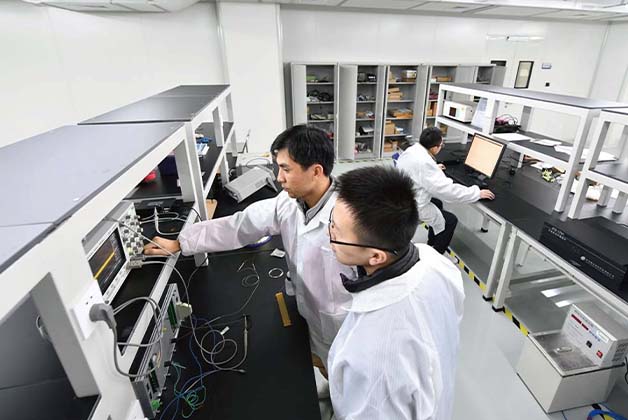
Fiber technology will occupy a more pivotal position in the future of connectivity and related domains.As trends advance, expect networks to be faster, more efficient, and higher-capacity, devices to be smarter and more connected, and breakthroughs to emerge in numerous fields.
Identifying and Troubleshooting Fiber Problems
Fiber networks provide excellent capacity and reliability yet remain susceptible to occasional issues.When faced with connectivity issues in your fiber optic network, a systematic troubleshooting approach is essential to pinpoint the cause of the fault.The following outlines common signs and fixes to address fiber cable issues efficiently.
Initiate troubleshooting by checking the physical integrity and condition of cables.Probe for signs of damage, fraying, breaks, unsecured connectors, or sharp bends that interrupt transmission.
Employ a fiber power meter to measure optical levels across points in the link.Measurement deviations could suggest excessive attenuation and potential need for fiber repair or replacement.Check connector endfaces for contamination and debris that will lower transmission quality.Clean connector surfaces with proper fiber-cleaning tools to secure stable connections.